On the Poland ⇄ Ireland route most goods travel on pallets — from parts and appliances, through cosmetics and chemicals, to windows and furniture. The way a pallet is packed decides whether the load survives loading, the ferry crossing and unloading without damage, and how much you actually pay. Below, step by step, is how to prepare a pallet so it travels safely and without overpaying.
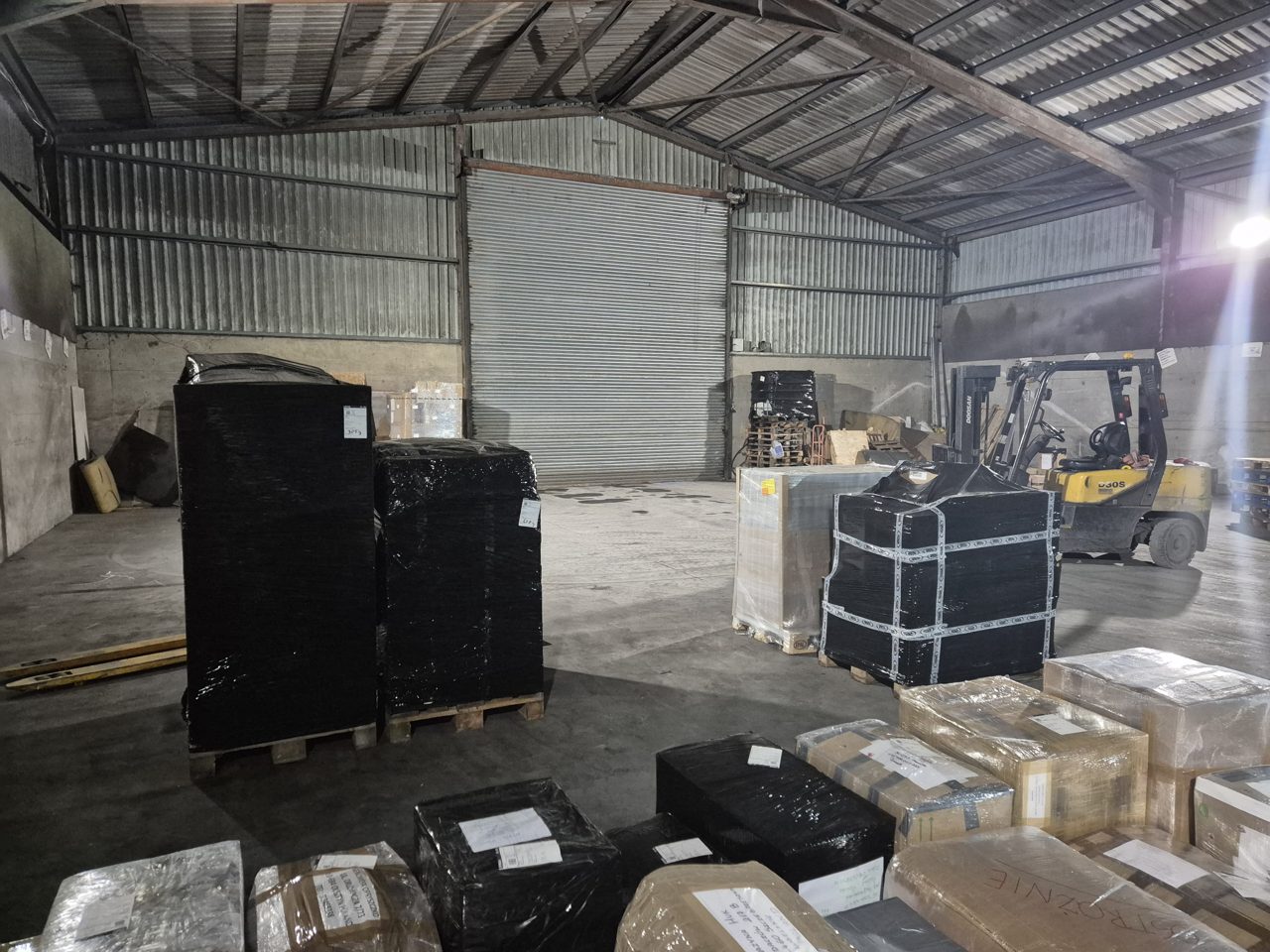
1. Choose the right pallet
It starts with a base that suits the goods. Most often we carry:
- EURO pallet 120×80 cm — the standard, the cheapest pallet space, ideal for most consignments up to 1000 kg.
- Industrial pallet 120×100 and 120×120 cm — for wider or heavier loads.
- Half pallet 60×80 cm — when there is little to send and you do not want to pay for a full space.
The pallet must be dry, with no cracked boards or protruding nails. A damaged base is the number one reason a load "spreads" in transit. If you are shipping to Northern Ireland, remember that the pallet standard can also matter at customs clearance (for example ISPM 15 timber on some routes) — if in doubt, ask us before collection.
2. Stack the goods within the pallet footprint
The golden rule: nothing may stick out beyond the pallet footprint. Every centimetre of overhang risks rubbing against the sides and against neighbouring pallets, and often pushes you into a higher rate per space.
- Heavy at the bottom, light on top — a lower centre of gravity means a more stable pallet.
- An even, compact layer — stack boxes like brickwork, with no gaps the load could slump into.
- A flat top — where possible, so the pallet can be safely stacked in the trailer.
3. Secure it: film, corner protectors, straps
Stretch film on its own is not enough — it wraps, but it does not stiffen. Effective securing is a combination of:
- Stretch film wrapped from the bottom (catching the pallet itself) up to the top, several layers.
- Cardboard corner protectors on the edges — they guard against dents from straps and neighbouring pallets.
- Banding or straps fixing the load to the pallet so it travels as a single block.
Fragile goods: windows, glass, ceramics
Sensitive loads are set upright, interleaved and strapped to a rigid base — a subject we expand on in a separate post about transporting windows on pallets. The key rule: fragile goods must have no slack and must never rest against a hard edge without a spacer.
Appliances and furniture
Equipment in original boxes should stay in its factory packaging with an extra wrap of film; upholstered and flat-pack furniture should be protected with corner protectors and film — details under the furniture transport service.
4. Weight and height — this is where the price comes from
We charge a pallet consignment by pallet space, and how many spaces your load takes is decided by two parameters: weight and height.
- Weight — up to 1000 kg per pallet as standard. Heavier loads are agreed individually.
- Height — a low pallet is one space; a tall one that cannot be stacked can take up more. That is why it pays to pack compactly and leave no empty space at the top.
You can work out the exact rate for your pallet in the calculator in the price list — you enter the pallet type, the weight and the height, and see the price straight away. It is the same amount you will later see on the invoice.
5. Label the pallet and prepare the paperwork
The pallet should carry a legible label with the recipient's details and eircode (that is what we use to assign the zone in Ireland and confirm the price). On top of that:
- Commercial invoice / goods documents — the sender is responsible for these.
- Customs documents — if you are shipping to Northern Ireland, import documents are required; ask us what to prepare.
The rest is handled by our fleet: collection by tail-lift vehicle (no dock needed), weekly departures, delivery in 4–6 business days on average, carrier liability cover up to €200,000 and SMS/email notifications at every stage.
What you cannot pack on a pallet
Excluded from carriage are, among others, dangerous goods (ADR) without prior arrangement, excise goods without documents, cash and valuables, and loads prohibited by law — the full list is in our terms and conditions. If you are unsure about your goods, it is best to ask before sending.
The takeaway: a well-packed pallet — the right base, goods within the footprint, film plus straps, a compact height and clear labelling — travels safely and costs less. If you have doubts about an unusual load, write to us: we will advise how to prepare it.
Has been organising transport of pallets, windows and furniture on the Poland ⇄ Ireland route since 2017. He writes about what actually works — on the road and in the warehouse.